Celebrate National Sugar Cookie Day

Five Recipes Perfect for Celebrating National Sugar Cookie Day

Sometimes you just need an excuse to bake up something yummy! We rounded up some of the cutest and most delicious recipes on the web for you to share with your little ones.

Don't worry if your finished product would be best suited as a "Pinterest-fail." All that counts is the taste...and the time spent together.

Enjoy!

Five Recipes Perfect for Celebrating National Sugar Cookie Day

Watermelon-Shaped Cookies


Kids often lose interest after just a few cookies, so it can be easiest on the head-baker if you just keep everything uniform instead of doing multiple designs at once. These watermelon-shaped cookies are fun and adorable, yet keep it simple enough with just a couple colors of frosting.


Five Recipes Perfect for Celebrating National Sugar Cookie Day

Skillet Sugar Cookie


A different twist that won't involve heating up the oven on a hot day! Plus it's all done at once, so you don't have to spend hours taking cookie sheets in and out.


Five Recipes Perfect for Celebrating National Sugar Cookie Day

Firework Sugar Cookies


We know, the 4th of July has passed, but you can use the memory of the holiday's fireworks displays to inspire your little decorators. This is a great activity for little hands, because it develops their fine motor skills - just keep an eye out that no one gets poked with a toothpick! Let them pick their favorite colors too: pink, orange, red, or yellow would all make spectacular displays.


Five Recipes Perfect for Celebrating National Sugar Cookie Day

Spiral Sugar Cookies


Who doesn't love sprinkles! These cookies are great because you can make them as fuss-free as you want by using pre-made dough and just adding some food coloring gel, or add in lots of flavor by making them from scratch and then amping them up with lime, lemon, almond, strawberry, or whichever extract flavor corresponds best with your color choice. 


Five Recipes Perfect for Celebrating National Sugar Cookie Day

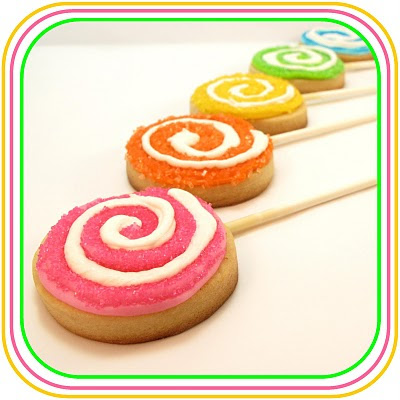
Swirly Cookie Pops


A cookie on a stick! Adorable and whimsicle, yet simple to create because you only need one shape to cut. Kids can each choose a color to work on, then create a sampling for a cookie pop bouquet which is a perfect "thank you" gift for someone who needs an act of kindness in your life.


Top 5 Expert Tips for Potty Training Success  

1.  Preparation is the key for success and the most crucial step is choosing a time to begin. You will need to persist daily for at least three months. 

2.  Remember to praise each triumph and not scold when things go badly. Even having a grumpy face when cleaning up a mess sends a negative message to an impressionable little mind. 

3.  When children are learning to use the toilet and having accidents, have your child wear underpants, then place the training pants over the underwear. This allows the child to feel the uncomfortable wet underwear, yet will prevent the "accident" from running onto the floor.

4. Most kids begin toilet-training around 2 years, but it’s not uncommon for a child to be in diapers at their third birthday. Many aren’t potty-trained until 4 years of age. However, if by age 4 your child is still resisting vehemently, it may be time to seek expert help. 

5. Like any kind of training schedule, routine helps. Many children have a bowel movement around the same time each day, often within an hour of eating, and urinate within an hour of having a long drink. Be guided by your child’s body clock and try to ensure it doesn’t correspond with their tired time. 

Wondering if your child's development is normal? Still struggling with toilet training issues? We can help!

Contact our professional team of therapists to answer all your questions and give you peace of mind. 

Busy Bags

Keeping a child occupied doesn't need to be time consuming or stressful. There are plenty of easy ways to quickly put together activities where you will be able to keep your child occupied, while they are learning at the same time!

We quite often use ‘busy bag’ activities to work on various skills such as fine and gross motor, speech (talking about colors, shapes, animals, etc.), attention to detail, and concentration.  The wonderful thing about busy bags is that depending on how many you have, it is easy to swap them out so that you always have a variety of activities to do. Another great thing about busy bags is that they can vary in difficulty and length of time, so if your child needs easier activities that don’t require a long attention span you can alter the busy bag to fit their needs. You can also create themed busy bags to match seasons or various holidays, providing further learning opportunities.
Here are links to some of our favorite Busy Bags!


You can also find more Busy Bags over on our Pinterest page. 

Featured App: Heads Up! By Warner Bros.


HEads_up.jpgHeads Up! is an interactive app that is fun for kids and adults. This app is available for both Android (free) and Apple ($0.99) devices. Heads Up! comes with seven card decks including: Happy Holidays, Act It Out, Superstars, Animals, Accents & Impressions, Just for Kids, and Famous Families. Additional decks are available for purchase at $0.99 each.
Once a deck is selected, a player places the phone or tablet up to his or her head. A second player describes each word or phrase so that the first player can guess what it is. The tablet or phone is flipped forward when the item is guessed correctly and flipped backward to pass to the next item. The player or team who can guess the most words within the one minute time limit wins! 
Heads Up! is a great app to target turn-taking and teamwork. It is a fun way to practice language skills such as using clues to identify an item and using expressive language to describe people, objects, actions, or animals. In addition, a video is recorded during each round and may be played back for review. The video feature can allow the child visual feedback on facial expressions, body language, and can help with understanding different perspective taking techniques. 
Requires iOS 6.0 or later. Compatible with iPhone, iPad, and iPod touch. This app is optimized for iPhone 5.
Requires Android 2.3 and up.
If you have any questions about this app, or would like to see other featured apps, please visit the resources page on our website at www.pediatrictherapypartners.com.

It’s Turkey Time!

The holidays present many wonderful opportunities for learning. In the spirit of Thanksgiving we’re busy incorporating turkeys into our sessions giving the children ways to work on their speech and fine motor, along with other skills in their time with us.

We have different variations turkeys hanging out with us this month. We’re talking about colors that we want our turkeys to be, how long their legs should be, what shapes we are using, how we should attach the various pieces of the turkeys together, and so on.

For our first turkey we used half of a paper plate, tissue paper squares, a construction paper circle, and construction paper for the beak and giblet. Depending on the age of the kiddo and the skill set that they have, we’ll let them cut out the different pieces needed; such as cutting the plate in half, the tissue paper into squares, and the construction paper into the shapes needed for the head, beak and giblet.

  
For our second turkey we used half a paper plate, construction paper for the body, head, eyes, beak, giblet and legs. We colored the feathers onto the edges of the plate, and glued the various body parts of the turkey to the plate. We worked on our folding skills with giving the legs a little dimension, and cut the ends for feet.


Both of these activities are really easy to do with the kiddos with only a minimal mess to clean up at the end, and covers speech, gross motor skills, fine motor skills, decision making, and creativity.

Skills Addressed with Carving a Pumpkin

Carving a pumpkin creates a great way for children to work on their occupational, physical, and speech-language skills through the use of a fun task right at home. Skills including gross motor, fine motor, visual motor, speech, social skills, decision making, bilateral coordination, imagination and creativity are all skills that are used while carving a pumpkin.

Choosing a pumpkin creates an opportunity for a child to use their decision making skills and their social skills. If they are given the opportunity to choose a pumpkin on their own it creates an environment where they not only will have to weigh the options of which pumpkin to pick, but they will also be using their independence to pick out their pumpkin, and to be confident in their selection. Picking out a pumpkin also allows you (or others) to have a conversation with your child to get them speaking. Language such as “shall we get the big pumpkin or the little pumpkin?” and, “Which one do you want?” gives children the opportunity to interact and describe which size and look of pumpkin they would like.  They are also given the chance to use their gross motor skills through this process by picking up pumpkins, pushing them around, and carrying them to the car.

After a child has made the decision on which pumpkin they would like to carve, they need to clean out the inside of the pumpkin. Tactile input can be incorporated by using their hands to clean out the pumpkin, as the guts are cold and squishy. Then bilateral skills and upper body strength can be incorporated by holding the pumpkin with one hand and using a spoon to scrape with the other hand. You can incorporate speech by asking them to describe how the insides of the pumpkin feel to them. Do they feel slimy or squishy? Are they cold or warm?


Fine motor skills are incorporated when drawing on the pumpkin to decide where to cut out for the eyes, nose and mouth. This also is another opportunity for the child to use their imagination and creativity, along with decision making. Depending on the age of a child you might want to do the cutting yourself and let them watch, but overall the end result will be that your child put to use many of their skills to get to the end point of carving a pumpkin, and they can be proud of the results too! 

It's Time to Play!

Summertime has started, and as the days become longer, the amount of activities that children are involved in become greater. From baseball to summer camps and classes, children are often times rushed from one activity to the next in an attempt to help them learn skills that are necessary for their development. However, in the midst of going from one activity to the next, children become stressed out and end up disengaged in the activities that they are immersed in due to the lack of downtime or free play that they are allowed.

Studies show that free play is the best possible way for children to grow and gain skills that are necessary for their development. It allows children to use their creativity while developing their imagination, dexterity, and physical, cognitive and emotional strength. As a result of this, free play is very important at aiding in healthy brain development.

There are many things that children can learn through free play. The advantages of it certainly outweigh any disadvantage to free play that might be present.
  • Social Skills – When a child is engaged in free play, they often times will seek out other children to engage with them. They might turn the playground into a castle, and one child will be the king, and the other the queen. Through this process they will be acquiring the abilities to make decisions, collaborate, cooperate with others, control impulses and empathize.
  • Virtues – Sometimes while playing a child might run into issues with their puzzle piece not fitting the way they would like it to, or their stack of blocks might keep tumbling down. It is through these experiences that children learn perseverance, patience, temperance, contentment, persistence, and the list continues on.
  • Physical Development - Through free play a child is learning how to do things without being told how. Just like when your child learned to crawl and walk, free play allows him the chance to try new things. A great place to do this is at the playground and let them climb. This allows him to build their strength, coordination, a sense of body awareness in space and competence.
  • Self-Discovery – Free play gives kids the time that they need to be kids. They can write, think, build, draw, figure out what they like and don’t like, dream and most of all, use their imagination.
There are many ways that you can allow your child to have free play to learn and grow. Have playdates with other children, go to the park or spend time in your sandbox in your backyard, provide your child with a dress up box filled with costumes and props and let them pretend to be adults. Have a box filled with objects such as paper towel rolls, plastic bottles, scraps of yarn, fabric and paper and allow your child to build things with no pressure to have any sort of required end result. Encourage them to tell stories and sing songs and most importantly of all, allow your child to do what they do best, be a kid.


More resources on free play: